Can You Train Reaction Time?
What research says about improving reaction time, which parts of a game reaction you can realistically speed up, and a practical routine to do it.
 Piotr Vassev··3 min read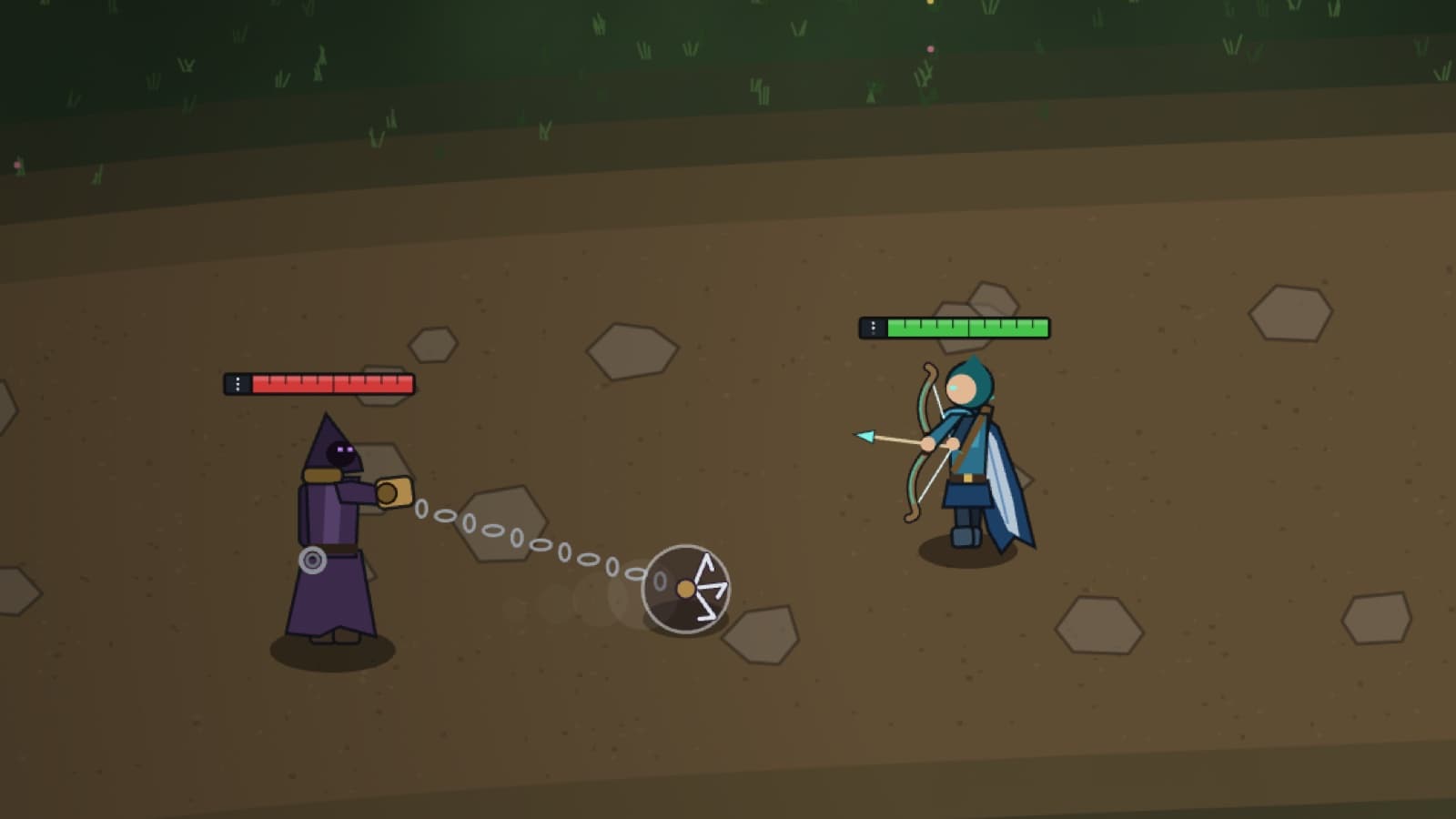
Short answer: you can't make your nerves much faster, but you can make your reactions much faster. That sounds like a contradiction until you split a reaction into its parts.
What a reaction is made of
When a hook flies at you, the time from "it appeared" to "you moved" includes:
- Perception: your eyes and brain registering the change.
- Recognition: identifying what it is and where it's going.
- Decision: choosing a response from the options you have.
- Execution: the motor command and the button press.
Perception and raw motor speed are largely fixed by biology. Recognition and decision are where practice pays off, and in games they're often the biggest share.
What the research says
- Simple reaction time is stubborn. Repeating a basic "click when it changes" task gives some early improvement as you get used to it, then levels off.
- Action games are associated with faster responses. Dye, Green and Bavelier (2009) reported that action video game players responded faster with no loss of accuracy. Not every study agrees, and it's hard to separate training effects from who chooses to play, but the direction is consistent.
- Age slowly works against you. In a large study of StarCraft 2 replays, Thompson, Blair and Henrey (2014) found reaction-related performance starting to decline in the mid-twenties. Older players made up for it with smarter, more efficient play, which is the same lesson again: decision quality compensates for raw speed.
What you can actually train
Recognition: learn the tells
The fastest players don't react to the damage. They react to the wind-up: the step forward, the arm pulling back, the flash before a charge. In Hook Dodge, the harpooner pulls back for 150 ms before throwing. Spotting that shaves time off every dodge.
Decision: pre-load your answer
Hick's law says more options mean slower choices. Cut the options before the fight starts:
- Decide now which way you'll Flash if the engage comes from that bush.
- Keep your cursor where your escape should go, not on your champion.
- Know your safe zone before you need it.
When the threat appears you're executing a plan, not making one.
Execution: remove friction
- Keep your fingers resting on the ability keys.
- Use the key that's fastest for you. That's why our benchmarks let you choose D or F.
- Cut avoidable delay: higher refresh rate, game mode on your display, and no frame-rate caps far below your refresh rate.
A practical routine
- Warm up for five minutes. Reaction time is measurably worse in the first few minutes of play.
- Do focused reps on one situation. Ten attempts of the same scenario beats an hour of random play for this skill. Track your median and spread, not your best.
- Review misses. Was it late recognition, a hesitant decision or a wrong direction? Each needs a different fix.
- Sleep. Sleep deprivation is one of the most reliable ways to slow reactions and make them less consistent.
The honest summary
You won't turn a 250 ms brain into a 150 ms brain. But in a real fight, most of your reaction isn't raw nerve speed: it's recognizing, deciding and executing. Those parts respond well to deliberate practice, and that's where the next 50–100 ms of in-game speed comes from.
FAQ
- Can you improve your reaction time with practice?
- Your raw, simple reaction time improves only modestly with practice. Your reaction time to specific game situations can improve a lot, because practice shortens recognition and decision time: you learn the cues and pre-decide your response.
- Do video games improve reaction time?
- Research on action video game players, such as Dye, Green and Bavelier (2009), found faster responses without a loss in accuracy. Whether that's caused by playing or by who chooses to play is still debated, but fast-paced games clearly don't hurt.
- Does reaction time get worse with age?
- Yes, gradually. A 2014 study of StarCraft 2 players by Thompson, Blair and Henrey found measurable slowing beginning in the mid-twenties, though experienced players compensated with better strategy and efficiency.

Piotr Vassev
Software engineer, long-time League player and creator of mechanix.gg. Builds the frame-accurate timing and game simulations behind the benchmarks, and writes about what the numbers actually say.
Connect on LinkedInKeep reading