Does Sleep Affect Reaction Time? Sleep, Caffeine, Long Sessions and Tilt
What research says about the day-to-day things that change your reaction time: a short night, caffeine, long sessions and tilt, and a quick check before you queue.
 Piotr Vassev··5 min read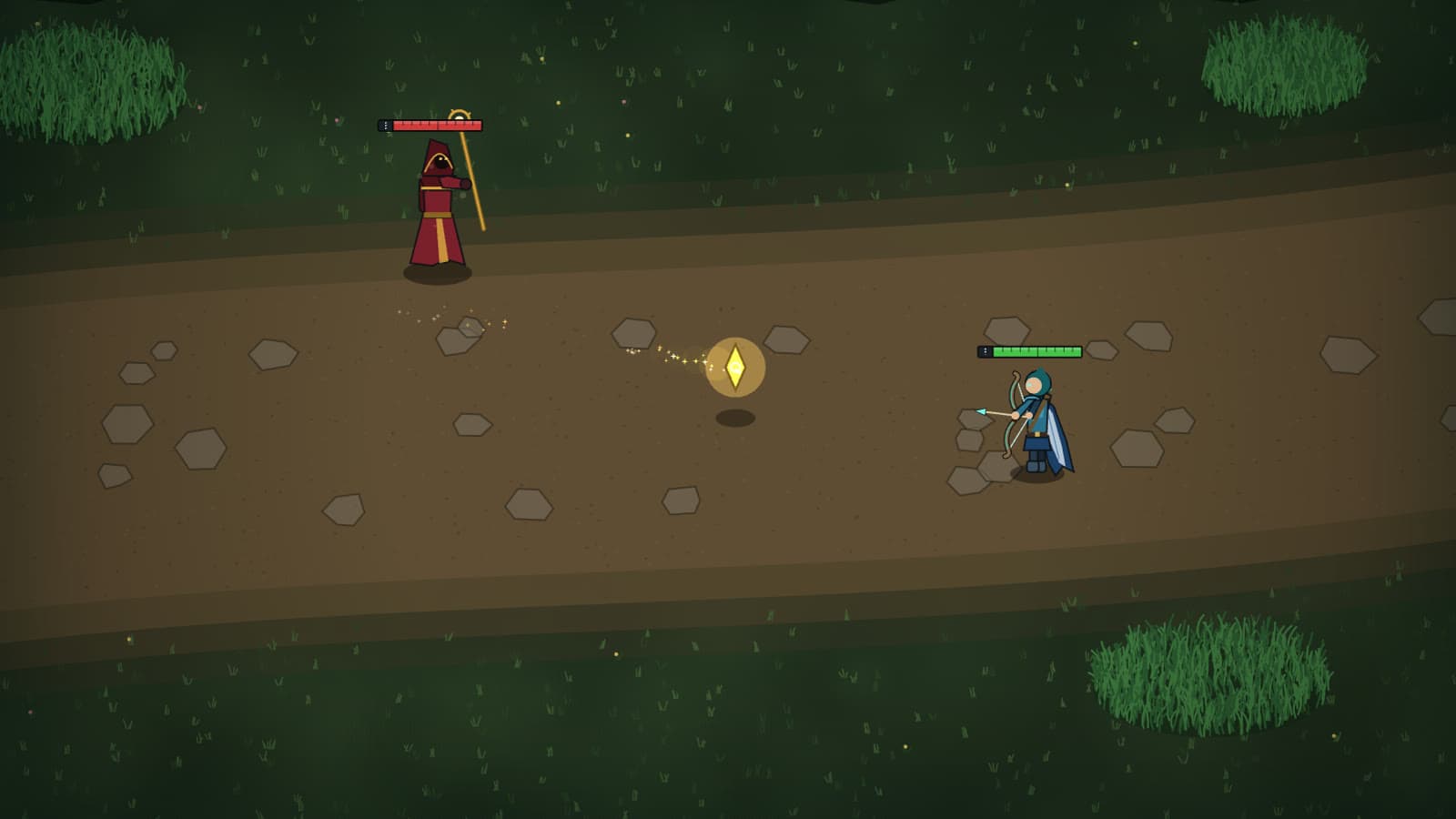
Can You Train Reaction Time? covers what improves over weeks of practice. This post is about what changes from one day, or one hour, to the next: how you slept, what you drank, how long you've been playing and how the last game went.
Sleep: the biggest, best-measured effect
Most sleep research uses the psychomotor vigilance task (PVT): a light appears at random intervals for about ten minutes and you press a button. It's close to a pure reaction test.
- Short-term sleep loss hits simple reactions hardest. Lim and Dinges' 2010 meta-analysis pooled 70 studies of up to 48 hours without sleep. The largest effect was on lapses in simple attention (g = −0.78); the effect on reasoning accuracy wasn't significant.
- A few short nights add up, and you don't feel it. In Van Dongen et al. (2003), 48 adults spent 4, 6 or 8 hours in bed per night for 14 days. Six hours or less produced deficits equivalent to up to two nights without sleep, while participants' sleepiness ratings barely rose after the first few days.
- Late nights are measurable. Williamson and Feyer (2000) found that after 17–19 hours awake, performance on some tests was equal to or worse than at a 0.05% blood alcohol concentration, with response speeds up to 50% slower on some tests. Wake up at 8 am and a 1 am ranked game is 17 hours in.
This matters for reading your own scores: Basner and Dinges (2011) found that mean and median reaction time picked up sleep loss only weakly. Lapses (responses of 500 ms or more), overall response speed and the slowest 10% of responses picked it up best.
The American Academy of Sleep Medicine and Sleep Research Society recommend seven or more hours per night for healthy adults.
Caffeine: real, but smaller than it feels
A review by McLellan, Caldwell and Lieberman (2016) found that low (about 40 mg) to moderate (about 300 mg) doses improve alertness, vigilance, attention and reaction time, with less consistent effects on memory and on judgment and decision-making.
The catch is withdrawal. James and Rogers (2005) argued that in regular users, most of caffeine's apparent benefit is reversing the withdrawal effects of a night without it. In Rogers et al. (2013), with 369 participants, caffeine sped up simple and choice reaction times in both regular and light users, but in light users it raised anxiety and jitteriness enough that mental alertness didn't improve. The paper's title: "Faster but not smarter".
Gaming-specific evidence is thin. In Thomas et al. (2019), nine elite League players tested after each of three games showed no difference between an energy drink and a placebo.
On safety, the European Food Safety Authority says single doses up to 200 mg and up to 400 mg a day don't raise safety concerns for healthy adults (excluding pregnant women), and that 100 mg may affect sleep in some adults, especially close to bedtime.
Long sessions: slower, or just sloppier?
Reaction time drifts even within one sitting. In Lim et al. (2010), people doing a 20-minute PVT got progressively slower and reported more mental fatigue afterwards. A systematic review by Habay et al. (2021) of 21 papers found that mental fatigue impairs sport-specific skills, including decision-making, reaction time and accuracy.
Studies of actual gaming sessions are small and don't agree:
- Sousa et al. (2020) tested 17 college players before and after competitive sessions averaging about 2.5 hours. On a Stroop test they were faster but less accurate afterwards (95% to 91% correct).
- Thomas et al. (2019), above, found no significant change on their reaction time test across three games.
Where a session did change something, speed held up and mistakes crept in, so don't judge yourself on speed alone.
Tilt and stress
There's little direct research on tilt and reaction time. A qualitative study by Cregan, Toth and Campbell (2025) found that gamers describe tilt as negative emotions, hindered thinking and worse play, but those are players' accounts, not measured times. In Mateo-Orcajada et al. (2023), 14 amateur League players losing their first game reported more anger and low mood before the next one, and fatigue rose after every game regardless of result.
For stress in general, Shields, Sazma and Yonelinas (2016) found in a meta-analysis that acute stress impaired working memory and cognitive flexibility, with mixed effects on inhibition. That's the thinking side of a fight, like tracking cooldowns, more than the button press.
Summary
| Factor | Typical effect | Source |
|---|---|---|
| Up to 48 h without sleep | Largest effect on lapses in simple reaction tasks | Lim and Dinges, 2010 |
| ≤6 h in bed for two weeks | Deficits equal to up to 2 nights without sleep, largely unnoticed | Van Dongen et al., 2003 |
| 17–19 h awake | Some tests equal to or worse than 0.05% blood alcohol | Williamson and Feyer, 2000 |
| Caffeine, low to moderate dose | Faster reaction time, more alert; inconsistent on decisions; in regular users partly withdrawal reversal | McLellan et al., 2016; Rogers et al., 2013 |
| Long sessions | Steady slowing over 20 min of vigilance; in gaming studies, mixed: faster but less accurate, or no change | Lim et al., 2010; Sousa et al., 2020; Thomas et al., 2019 |
| Stress and tilt | Worse working memory and flexibility; reaction time evidence thin | Shields et al., 2016 |
Should you queue right now?
A quick benchmark run checks your state instead of guessing:
- Get a baseline. On a rested day, run the same benchmark on the same device and note your median, consistency and success rate.
- Check before a session, or after a bad streak. One run takes a couple of minutes.
- Look at the bad attempts first. Going by Basner and Dinges, tiredness is likelier to show as more misses and a wider spread than as a slower median. In Cleanse, that means more "too slow" results.
- Don't overread a few milliseconds. One run is noisy. A clearly worse spread and success rate than your baseline is the signal.
Better to find that out before you queue than after a loss. Why medians and spread beat a best time: What Makes a Good Mechanics Benchmark?
Try it · free, in your browserCleanseA homing sigil always hits. Cleanse the stun within 100 ms.Bottom line
Sleep has the strongest evidence, and it shows most in your worst attempts. Caffeine makes simple reactions faster but not clearly better decisions. Long sessions and tilt are less studied; the best gaming data points to more mistakes rather than slower clicks.
FAQ
- Does sleep affect reaction time?
- Yes, and it's the best-documented factor. In lab studies, sleep loss shows up mostly as lapses, occasional very slow responses, rather than an evenly slower average. Van Dongen et al. (2003) found that two weeks of 6 hours or less in bed per night caused deficits equivalent to up to two nights without sleep, and participants largely didn't notice.
- Does caffeine improve reaction time for gaming?
- Reviews report faster reaction times and better alertness after low to moderate doses, with less consistent effects on decision-making. In regular coffee drinkers, much of the benefit may come from reversing overnight withdrawal rather than a net boost (James and Rogers, 2005). A small study of elite League players found no difference between an energy drink and a placebo.
- Why am I slower after a few games?
- Possibly fatigue, possibly mood. Reaction times slow steadily over just 20 minutes of a sustained attention task, and mental fatigue impairs sport-specific reaction time and decisions. Studies of real gaming sessions are small and mixed, though: one found players faster but less accurate after about 2.5 hours, another found no change across three games.

Piotr Vassev
Software engineer, long-time League player and creator of mechanix.gg. Builds the frame-accurate timing and game simulations behind the benchmarks, and writes about what the numbers actually say.
Connect on LinkedInKeep reading