How Fast Do You Need to React to Flash an Engage?
A millisecond budget for escaping a gap-closing engage: flight time, your reaction, your setup, and why an enemy Flash first changes everything.
 Piotr Vassev··3 min read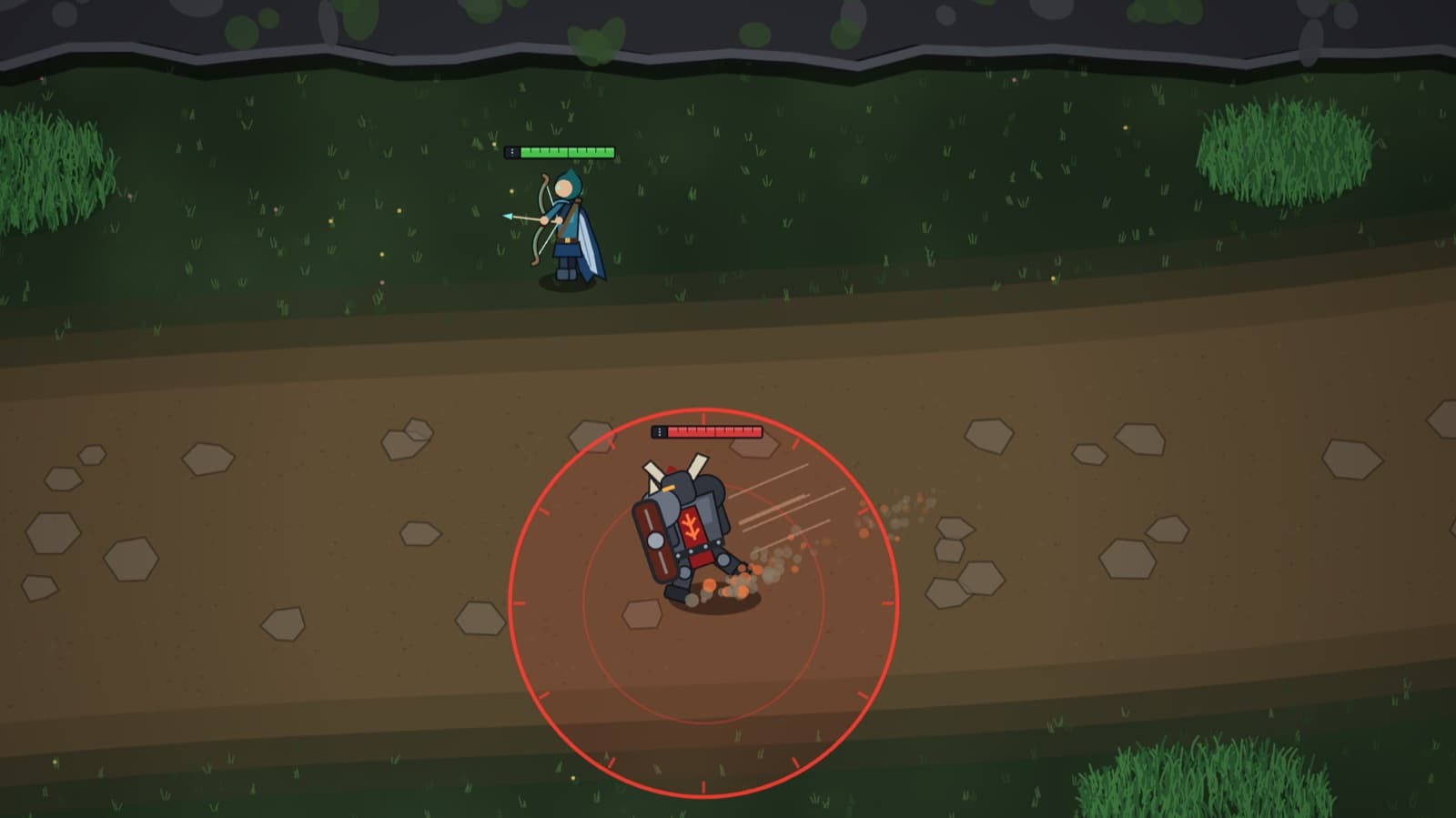
Escaping an engage is a race: the enemy's travel time against your reaction, decision and execution. Here's the millisecond budget, with numbers from our Flash the Engage benchmark.
The deadline: how long the engage takes to land
In Flash the Engage, a juggernaut charges at 1,800 units per second and knocks up everything in a 200-unit zone where it lands. The time you have depends on how it starts:
| Mode | What happens | Time to landing |
|---|---|---|
| Easy | Charge from 720–950 units away | ~400–530 ms |
| Medium | Enemy Flashes 360 units, then charges | ~260–330 ms after the Flash |
| Hard | Charges from hidden brush | ~290–470 ms after it breaks cover |
Flight time is proportional to distance, so the closer it starts, the less you get.
Your side of the budget
To escape, everything must happen before the landing:
- Reaction: about 200–250 ms for a ready, focused player (faster if you're expecting it).
- System delay: often 20–50 ms from display, input and software combined.
- Execution: the Flash itself is instant, but it must go the right way. A Flash toward the landing point, or one that's too short, still gets you caught.
Add them up for Easy: 220 ms reaction + 30 ms system = 250 ms, against a 400–530 ms window. That's a comfortable margin, with room to aim.
Now Medium: the same 250 ms against a 260–330 ms window leaves 10–80 ms of margin, and that's only if you react to the enemy's Flash. If you wait to see the charge itself, you've already spent part of the window.
Why "Flash then engage" is so effective
Players cast the engage the moment their Flash lands. The Flash covers distance instantly, so:
- The visible part of the threat, the charge, gets shorter.
- The first warning sign is the Flash, not the charge.
- Your recognition has to be triggered by something more subtle.
That's what Medium mode trains: reacting to the first sign, not the obvious one.
Direction matters as much as speed
Our landing zone has a radius of 200 units and your champion's hitbox adds another 35, so you have to finish more than ~235 units from the landing point. A full Flash travels 360 units. That's enough if you Flash away from the landing point, but not if you Flash sideways along the zone or only part of the way.
That's why our results report a direction score alongside reaction time: the distance gained relative to a perfect full Flash straight away from the landing point.
How to get faster at it
- Pre-aim your escape. Keep the cursor where you'd Flash, so execution is just one key press.
- Watch for the first tell: the enemy Flash, the brush rustling, the wind-up.
- Know your windows. If you know Medium gives you ~300 ms, you know there's no time to look twice.
Bottom line
Against a plain engage from range you have roughly half a second, enough for a normal reaction with margin to aim. Against Flash plus engage you have about 300 ms, which leaves almost no slack. In that window, reacting to the first sign and pre-aiming your escape matter more than raw speed.
FAQ
- How much time do you have to Flash an engage?
- In our Flash the Engage benchmark, a charge lands 400–530 ms after it starts on Easy, and about 260–330 ms after the enemy's Flash on Medium. You need to recognize it, react and aim within that window.
- Why is a Flash + engage combo so hard to react to?
- The enemy Flash closes part of the gap instantly, so the charge that follows is shorter. If you react to the charge rather than the Flash, you've lost a large part of an already tight window.
- Should I Flash immediately or wait?
- Against a committed engage, as early as you can recognize it. The later you Flash, the less margin you have for system delay and aiming mistakes. Waiting only makes sense when you're baiting a specific ability.

Piotr Vassev
Software engineer, long-time League player and creator of mechanix.gg. Builds the frame-accurate timing and game simulations behind the benchmarks, and writes about what the numbers actually say.
Connect on LinkedInKeep reading