Reaction Time vs Prediction in League
When can you react to a skillshot and when do you have to predict it? The time budget for dodging, why good players juke, and how throwers read your movement.
 Piotr Vassev··2 min read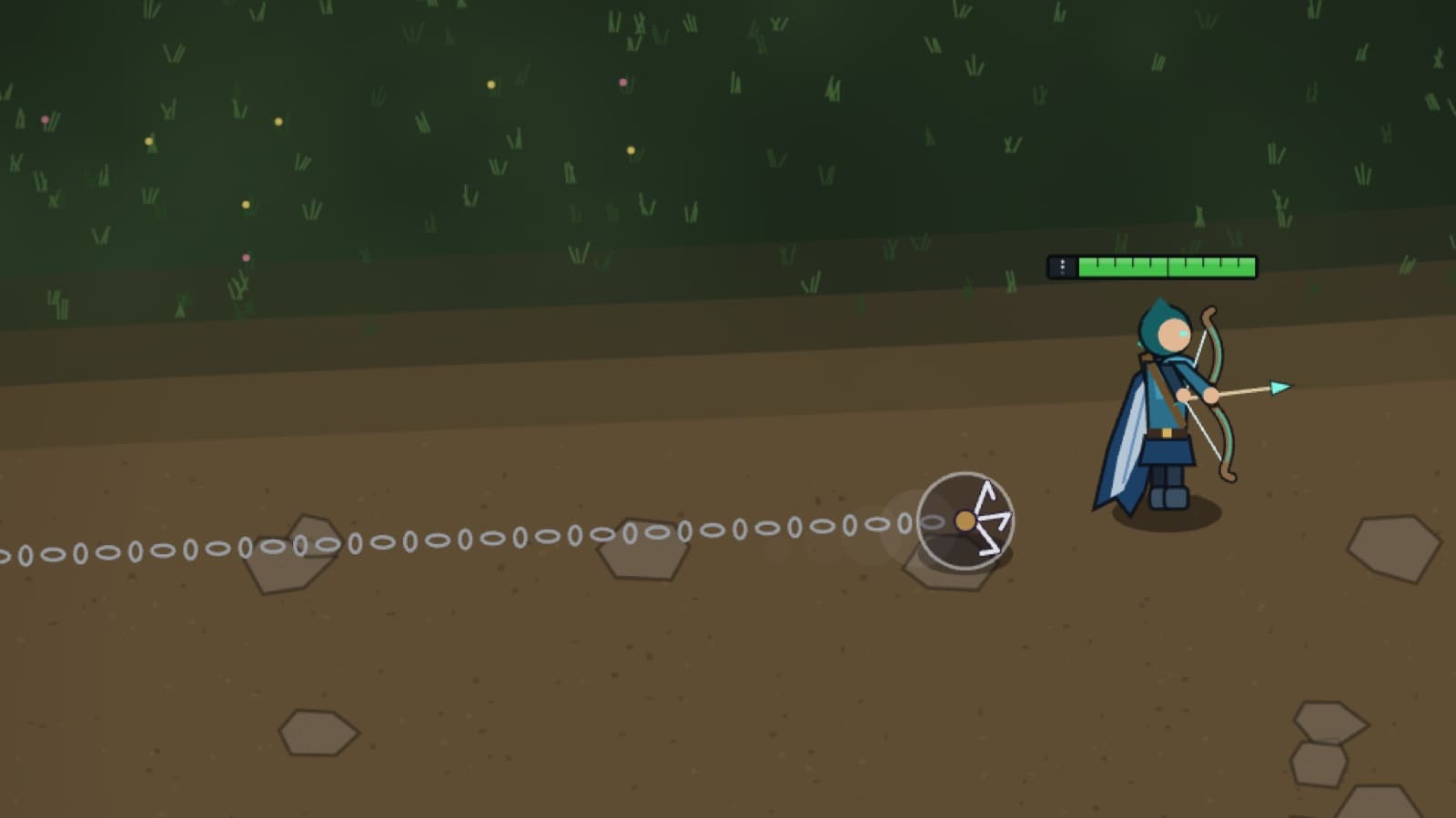
Every skillshot is a contest between two skills: the thrower's prediction and your reaction. Which one wins comes down to time.
The dodge budget
To dodge a straight projectile, you have to move your hitbox out of its path before it arrives:
Flight time ≥ your reaction + time to walk clear
With numbers from our Hook Dodge benchmark:
- The hook travels at 1,600 units/s from 700–1,100 units away: 440–690 ms of flight.
- To clear it you must move your center about 61 units sideways (hook radius 26 plus your hitbox of 35).
- At a move speed of 350 units/s that takes about 175 ms, if you're standing dead center and start moving perfectly sideways.
Add a 250 ms reaction and you need ~425 ms. At long range that fits. At the shortest ranges there's barely any slack, and any hesitation means you're hit.
Where reaction stops working
Close range, fast projectiles, or being caught mid-walk toward the path all shrink the window below what reaction can cover. In those cases the dodge has to start before the throw, through positioning and unpredictable movement. That's prediction, from the defender's side.
The thrower's side: reading your movement
A thrower can't react to your dodge either, since the projectile is committed once it's released. So good throwers predict:
- Against a steady walker, they lead: aim at where you'll be when the projectile arrives.
- Against a juker, leading fails, because you'll have changed direction. So they aim at the center of your movement pattern, where you average out.
- Against a commitment, such as a dash, an attack animation or a channel, they wait, because a committed target can't change course.
Our Hook Dodge harpooner works the same way. It watches your last half-second of movement; if you've been walking straight it leads you, and the more you've juked recently, the more it aims at the middle of your pattern instead.
What this means for you
- Don't walk in straight lines within range of a known skillshot. A steady path is the easiest prediction there is.
- Juke with purpose. Random back-and-forth keeps you near the middle of your pattern, which is exactly where pattern-reading aims. Vary distance and timing, not just direction.
- React when you can. At long range, a clean reaction to the throw beats any juke. Recognize the wind-up and move perpendicular to the line.
- Avoid commitments in range. Last-hitting animations and dashes are moments when you can neither react nor juke.
Reaction vs prediction isn't either/or
The best players use both: they position and move so the thrower's prediction is unreliable, then react to the throw once it's released. Reaction covers long range; prediction and unpredictability cover the range where reaction can't.
FAQ
- Can you react to every skillshot in League?
- No. If a projectile's flight time is shorter than your reaction time plus the time you need to walk out of its path, pure reaction can't save you. At close range you have to be dodging already, which means predicting.
- What does juking mean?
- Juking is moving unpredictably, changing direction and rhythm, so an opponent can't aim where you'll be. It makes their prediction harder rather than relying on your reaction.
- How do good players land skillshots?
- They aim where you'll be, not where you are. Against a steady walker they lead the target; against a juker they aim at the middle of the movement pattern, or wait for a commitment like a dash or an animation lock.

Piotr Vassev
Software engineer, long-time League player and creator of mechanix.gg. Builds the frame-accurate timing and game simulations behind the benchmarks, and writes about what the numbers actually say.
Connect on LinkedInKeep reading